Back to News
IP28, the Oregon hunting and fishing ban, won’t be on the November ballot
July 27, 2026
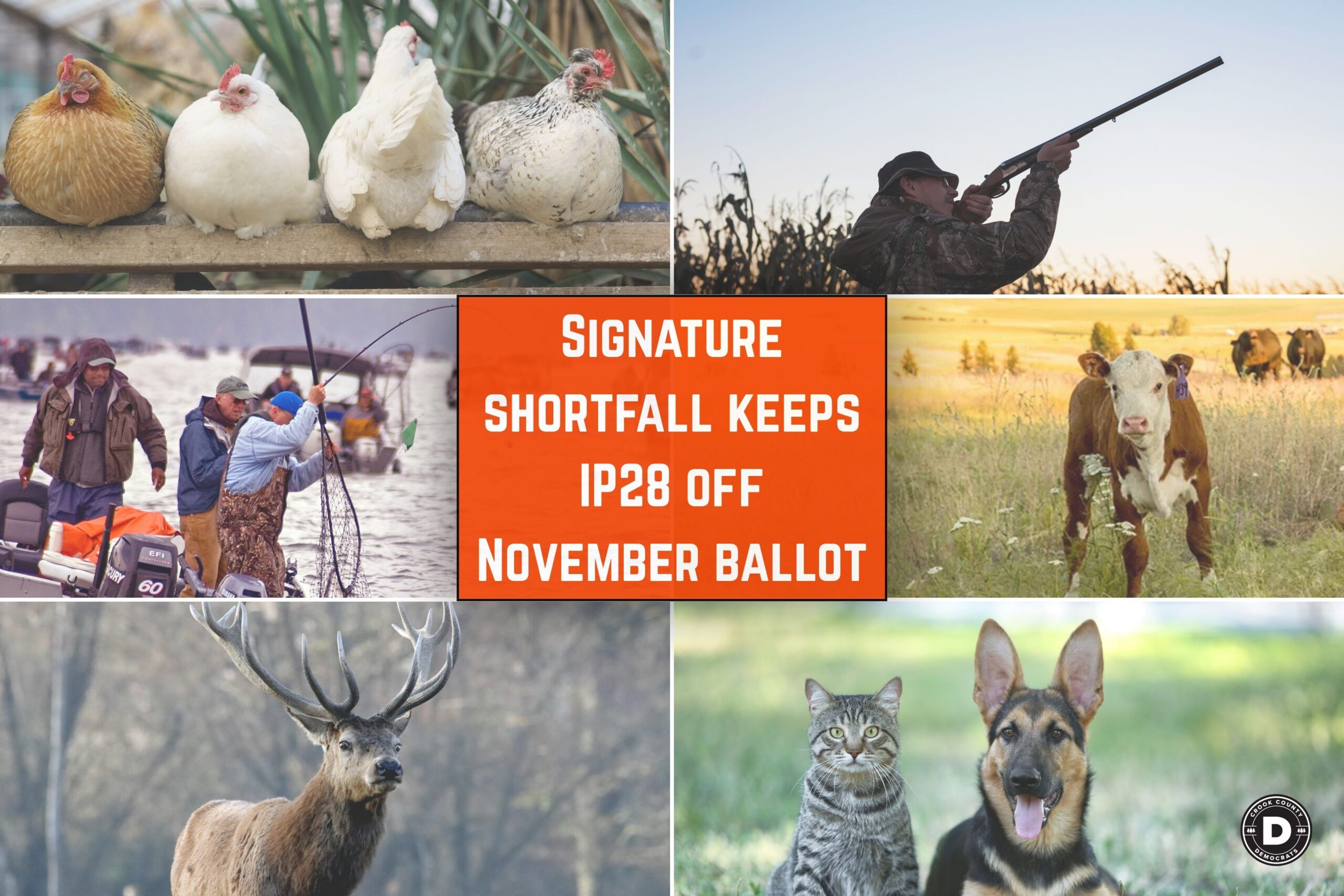
Initiative Petition 28, the controversial Oregon measure that sought to criminalize hunting and fishing, will not appear on the November ballot after the Secretary of State’s Office ruled that supporters failed to gather enough valid signatures.
Proponents turned in 142,784 signatures, comfortably above the 117,173 required. But only 104,262 were deemed valid by the Secretary of State’s Office after two rounds of checks by agency staff.
Had it passed, the measure was expected to cause major economic disruption and dramatically reshape farming and outdoor recreation across Oregon.
IP28 would have transformed Oregon law
The measure, formally known as the People for the Elimination of Animal Cruelty Exemptions (PEACE) Act, proposed drastic changes to Oregon’s animal cruelty laws.
It would have upended daily life for anyone who raises or works with animals. Hunting and fishing would have been swept up in the ban, along with slaughtering livestock and even basic pest control. Standard animal husbandry practices would have suddenly been treated as crimes.
The shift would have forced processing plants, dairies, and ranches to close almost overnight, wiping out much of Oregon’s animal agriculture and opening the door for out‑of‑state and foreign producers to rush in and fill the gap.
The proposal drew criticism from across Oregon’s political spectrum and from a wide range of organizations
There was overwhelming bipartisan backlash from Oregon leaders and groups:
- We overwhelmingly approved a resolution rejecting the proposal, as did 17 other Oregon counties.
- All 37 House Democrats issued a joint statement opposing IP28. U.S. Senators Jeff Merkley and Ron Wyden also came out against it.
- Gov. Tina Kotek also criticized the idea. “I oppose it,” she said in a Facebook post. “Criminalizing activities like hunting and fishing would be wrong for Oregon. I know Tribal leaders, family farmers and ranchers and Oregonians across the state who care deeply about protecting our land, waters and wildlife. This petition does nothing to help them.”
- Republican gubernatorial nominee state Sen. Christine Drazan called it an attack by Gov. Tina Kotek’s “allies on Oregon’s economy and our way of life” in an X/Twitter post, even though Kotek opposed it.
- The petition also faced broad, bipartisan opposition from tribal, agriculture, and conservation communities, including the Oregon Farm Bureau, Oregon Hunters Association, Ducks Unlimited, Oregon Cattlemen’s Association, Friends of Family Farms, Oregon Dairy Farmers, and Oregon Veterinary Medical Association.
In a July 24 statement, Kotek said she was “relieved” the measure wouldn’t appear on the ballot: “I know from conversations with Oregonians across the state that this measure would have done nothing to help them,” she said.
Its backers had low expectations for approval
Supporters have acknowledged from the start that they did not expect voters to approve IP28. Instead, they hoped it would spark a broader conversation about animal cruelty and pave the way for future changes. Advocates would have considered it a victory just to see it on the ballot.
Chief petitioner David Michelson, a Portland-based animal rights and vegan advocate, told news outlets that organizers believed they gathered so many signatures because Oregonians are open to discussing animal cruelty, even if they don’t support this particular proposal. In reality, the Yes on IP28 committee used deceptive, emotionally charged framing (“the PEACE Act”) and relied on dedicated networks of urban animal-rights activists.
Real consequences remain
The real danger of measures like IP28 is that they can move ideas from the political fringe into the mainstream.
Bit by bit, laws are passed and rewritten. Over time, the public begins to accept things they never would have agreed to at the outset.
If this trend continues, it may be only a matter of time before a measure like IP28 becomes law.